

Right then, let’s talk about industrial sealants for projects down in the Southwest. It’s not the most exciting topic, I know, but it’s really important for getting things done properly. We’re going to look at the BS EN 15651 standards, which are basically the rulebook for these things. Getting it right means your buildings will last longer and look better, especially with all that coastal weather we get. So, stick around, and we’ll break down what you need to know about industrial sealants and British Standards.
Key Takeaways
- BS EN 15651 sets out the rules for sealants used in buildings, making sure they’re up to scratch.
- There are different parts to the standard for different jobs, like facades, windows, bathrooms, and floors.
- For the Southwest, think about how well the sealant will handle wind, rain, and sun over time.
- Picking the right sealant means matching it to the specific gap you’re filling and the conditions it will face.
- Following the rules for putting sealants on and letting them dry properly is just as vital as choosing the right one.
Understanding BS EN 15651 Standards For Industrial Sealants
When you’re working on building projects in the Southwest, or anywhere really, making sure things are built to last is a big deal. That’s where standards come in. They’re like a set of rules that help everyone know what good quality looks like. For sealants, the main set of rules we need to know about is the BS EN 15651 series.
The Importance of British Standards in Construction
Using British Standards, or BS, is pretty standard practice in the UK construction industry. They’re not just bureaucratic hurdles; they actually help make sure buildings are safe, functional, and durable. Think of them as a guarantee that the materials and methods used meet a certain level of quality. For projects in areas like the Southwest, with its unique weather patterns and coastal environments, adhering to these standards is even more important. It means the buildings can stand up to the elements and last for years without falling apart.
Overview of BS EN 15651 Series
The BS EN 15651 series is a European standard that’s been adopted in the UK. It specifically covers sealants used in buildings. It’s broken down into different parts, each looking at a particular type of application. This means there isn’t just one big rulebook; it’s split up to be more specific about what’s needed for different jobs. This makes it easier to pick the right product for the right place.
Key Requirements for Industrial Sealants
So, what do these standards actually look for in a sealant? Well, they focus on a few key things:
- Performance: How well does the sealant do its job? This includes things like how well it sticks, how much it can stretch and move without breaking, and how long it’s expected to last.
- Durability: Can it handle being outside? This means resisting things like UV rays from the sun, changes in temperature, and moisture. For the Southwest, this is particularly relevant with the salty air and frequent rain.
- Safety: Are there any risks associated with using it? This covers things like how it reacts to fire and if it releases any harmful substances.
The goal of these standards is to provide a clear benchmark for manufacturers and specifiers. It helps ensure that the sealants chosen for a project will perform as expected throughout the building’s life, reducing the need for costly repairs down the line.
Here’s a quick look at what the different parts of the standard cover:
| Part of BS EN 15651 | Application Area |
|---|---|
| Part 1 | Facade joints (the gaps on the outside of buildings) |
| Part 2 | Glazing applications (like fitting windows) |
| Part 3 | Sanitary applications (bathrooms and kitchens) |
| Part 4 | Floor joints (where floors meet walls or other floor sections) |
Understanding these basics is the first step to making sure you’re selecting and using the right sealants for your Southwest projects.
Classifying Industrial Sealants Under BS EN 15651
Right then, let’s get down to how these BS EN 15651 standards actually break down the different types of sealants we’re talking about. It’s not just one big category; they’ve split it up based on where you’re going to use the sealant. This makes a lot of sense, really, because a sealant for your bathroom isn’t going to cut it on the outside of a building, is it?
Part 1: Facade Joints
This is probably the biggest one for most construction projects, especially here in the Southwest with all our varied weather. BS EN 15651-1 covers sealants specifically designed for joints on building facades. Think about the gaps around windows, doors, and where different building materials meet. These sealants need to be tough. They’ve got to handle the wind, the rain, the sun – you name it. The standard looks at things like how well they stick, how much they can move without failing, and how long they’re expected to last.
- Movement Capability: How much the joint can expand and contract without the sealant breaking.
- Adhesion: How well it sticks to different building materials like brick, concrete, metal, and glass.
- Durability: Resistance to weathering, UV light, and temperature changes.
Part 2: Glazing Applications
Next up, we have BS EN 15651-2, which focuses on sealants used in glazing. This means the stuff that seals the glass into window frames or curtain wall systems. It’s a bit more specialised. Here, the sealant has to be compatible with the glass and the frame material, and it needs to provide a good seal against water and air ingress. It’s all about keeping the weather out and the building secure.
Part 3: Sanitary Applications
Now, if you’re working on bathrooms, kitchens, or swimming pools, then BS EN 15651-3 is your go-to. This part deals with sealants for sanitary joints and water-based installations. These sealants need to be resistant to mould and mildew, as well as being able to withstand regular cleaning and exposure to water. You don’t want sealant in a shower cubicle turning black after a few months, do you?
Key properties include:
- Resistance to water and cleaning agents.
- Antimicrobial properties to prevent mould growth.
- Flexibility to accommodate movement in sanitary fittings.
Part 4: Floor Joints
Finally, BS EN 15651-4 covers sealants for floor joints. This is important for industrial floors, warehouses, or even just high-traffic areas where joints need to be sealed to prevent dirt and liquids from getting in. These sealants have to be able to take a beating – think about foot traffic, cleaning equipment, and maybe even the occasional dropped item. They need to be tough and wear-resistant.
The classification system under BS EN 15651 is pretty straightforward once you get the hang of it. It breaks down the complex world of sealants into manageable categories based on their intended use, making it easier for specifiers and contractors to choose the right product for the job. This avoids confusion and helps ensure the sealant performs as expected over its lifespan.
Performance Criteria for Southwest Projects
Durability and Weather Resistance
When you’re working on projects down in the Southwest, you’ve got to think about what the weather throws at you. We’re talking about strong sun, maybe some salty air if you’re near the coast, and the usual rain and wind. Your sealants need to stand up to all of that without breaking down. BS EN 15651 has specific tests to check how well a sealant can handle UV light, temperature changes, and moisture. It’s not just about looking good initially; it’s about staying effective for years. You don’t want a sealant that cracks or peels after a couple of seasons, right? That’s a recipe for leaks and more expensive repairs down the line.
Adhesion and Cohesion Properties
This is all about how well the sealant sticks to the surfaces it’s applied to (that’s adhesion) and how well it holds itself together (that’s cohesion). For Southwest projects, you might be dealing with different building materials – concrete, brick, metal, glass. The sealant needs to bond strongly to all of them, even when things expand and contract with the heat. If it doesn’t stick properly, water can get in behind it. And if it’s weak internally, it can tear. The standards check these properties under various conditions to make sure the sealant is a reliable barrier.
Movement Capability and Elasticity
Buildings move. It’s a fact of life. Joints expand and contract due to temperature fluctuations, especially in areas with big temperature swings like the Southwest can sometimes have. Your sealant needs to be flexible enough to cope with this movement without losing its seal. The BS EN 15651 standards classify sealants based on how much movement they can handle, often expressed as a percentage. Picking a sealant with the right movement capability means the seal will stay intact, preventing drafts and water ingress, no matter how much the building shifts.
Choosing a sealant isn’t just about picking a colour. It’s about picking something that will do its job properly in the specific environment it’s going into, for the long haul. The standards help you make that informed choice.
Here’s a quick look at how movement capability is often rated:
- Class 12.5: For joints with limited movement.
- Class 25: Suitable for moderate movement.
- Class 35: For joints that experience significant expansion and contraction.
- Class 50: Designed for joints with substantial movement.
Always check the product data sheet and the BS EN 15651 classification to match the sealant to the expected joint movement.
Selecting the Right Industrial Sealants
Matching Sealant to Application
Choosing the correct sealant is a bit like picking the right tool for a job – you wouldn’t use a hammer to screw in a bolt, right? It’s the same with sealants. You’ve got to look at what the sealant is actually going to do. Is it for a window frame that’s going to get battered by wind and rain, or is it for a bathroom where it’ll mostly deal with steam and occasional splashes? The BS EN 15651 series breaks these down into specific parts, like Part 1 for facade joints and Part 2 for glazing. Getting this wrong means you could end up with a sealant that cracks, peels, or just doesn’t do its job, leading to leaks and damage down the line. It’s not just about picking something that looks the part; it’s about picking something that’s designed for the task.
Considering Environmental Factors
Now, thinking about the Southwest specifically, we’ve got a few things to consider. The coastal air can be pretty harsh, with salt and moisture. Then there’s the sun – UV rays can degrade some sealants over time, making them brittle. We also get our fair share of wind-driven rain, so whatever you choose needs to stand up to that. It’s not just about the immediate weather, either. Think about temperature changes throughout the year. A sealant that works fine in a mild winter might struggle when the summer heat really kicks in. You need a sealant that can handle the local climate, not just for a week, but for years to come.
Ensuring Compliance with British Standards
This is where BS EN 15651 really comes into play. You can’t just guess or go by what looks good on the tin. The standard gives us a way to check if a sealant is actually up to scratch for its intended use. It covers things like how much a joint can move and still be sealed, how well it sticks, and how long it’s expected to last. When you’re looking at products, check for the BS EN 15651 marking and the specific part it relates to (like Part 1, 2, 3, or 4). This tells you it’s been tested and meets certain performance levels. It’s your guarantee that the product has been assessed against recognised European standards, which is pretty important for any building project, especially one that needs to last.
Here’s a quick rundown of what to look for:
- BS EN 15651-1: For facade joints (think window frames, expansion joints on external walls).
- BS EN 15651-2: For glazing applications (like sealing glass into frames).
- BS EN 15651-3: For sanitary applications (bathrooms, kitchens – areas with moisture).
- BS EN 15651-4: For floor joints (where floors meet walls, or expansion joints in flooring).
Don’t get caught out by products that claim to do everything. Often, a specialist sealant designed for a specific job will perform much better than a general-purpose one, especially when you’re dealing with the varied conditions we see in the Southwest.
Installation Best Practices for Sealants
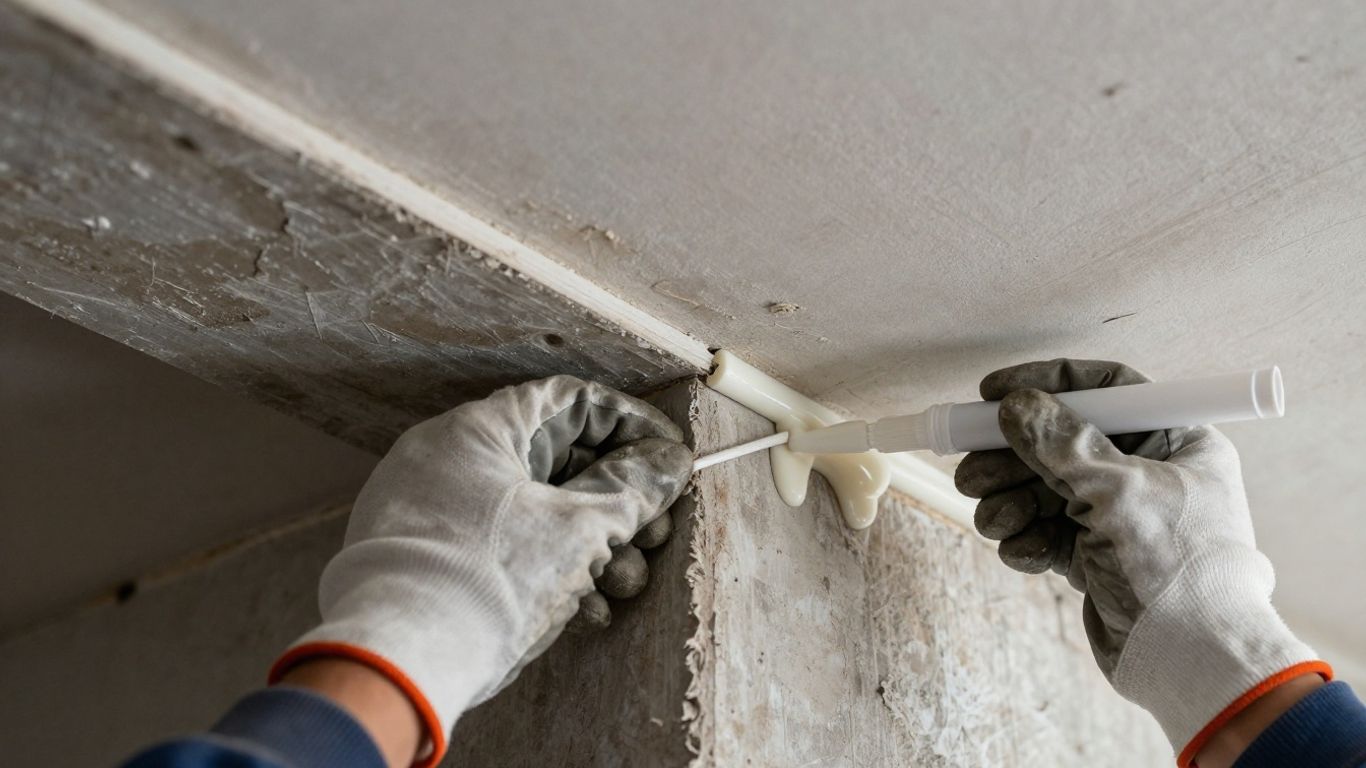
Getting the sealant application right is just as important as picking the correct product. A poorly installed sealant won’t perform as expected, no matter how good it is on paper. It’s all about the prep work and the actual application.
Surface Preparation Techniques
Before you even think about squeezing a tube, the surface needs to be spot on. Any dust, old sealant, grease, or loose bits will stop the new sealant from sticking properly. This is probably the most overlooked step, but it’s a big one.
- Cleaning: Use a suitable cleaner. For most common building materials, a good wipe-down with a clean cloth and a solvent like isopropyl alcohol usually does the trick. Make sure it dries completely.
- Removing Old Sealant: If there’s old sealant, you’ve got to get it all out. A sharp knife or a sealant removal tool works well. Don’t just cover it up; it needs to go.
- Masking: For neat lines, use masking tape. Apply it precisely along the edges of the joint. This saves a lot of cleanup later and gives a professional finish.
Application Methods
Once the surface is prepped, it’s time to apply the sealant. The goal is to get a consistent bead that fills the joint properly.
- Cutting the Nozzle: Cut the nozzle tip at a 45-degree angle. The opening size should match the joint width. Too big and you’ll waste sealant; too small and you won’t fill the joint effectively.
- Applying the Bead: Hold the sealant gun at a consistent angle and apply steady pressure. Move the gun smoothly along the joint, aiming for an even bead that makes good contact with both sides of the joint.
- Tooling: After applying the bead, you need to tool it. This pushes the sealant into the joint and creates a smooth, finished surface. Use a tooling spatula or even a damp finger (wear gloves!) with a bit of soapy water. This helps create a good seal and a neat appearance.
Curing and Joint Design
Sealant needs time to cure properly, and the joint itself plays a role in how well it works.
- Curing Time: Always check the manufacturer’s instructions for curing times. Avoid disturbing the joint until it’s fully cured. This can take anywhere from a few hours to several days, depending on the sealant type and conditions.
- Joint Depth: The depth of the joint is important for sealant flexibility. A general rule is that the joint depth should be about half its width, up to a maximum of about 12mm. Backer rod is often used to control this depth and prevent three-sided adhesion, which can restrict movement.
The success of any sealant application hinges on meticulous preparation and careful execution. Skipping steps here is a false economy that will likely lead to premature failure and costly remedial work down the line. Think of it as building a strong foundation for your sealant’s performance.
Here’s a quick look at typical joint depth recommendations:
| Joint Width (mm) | Recommended Depth (mm) |
|---|---|
| 6 – 12 | 6 |
| 12 – 25 | 12 |
| > 25 | 12 – 25 |
Remember, these are general guidelines. Always refer to the specific project requirements and the sealant manufacturer’s data sheet for precise recommendations.
Quality Assurance and Testing
Manufacturer’s Declarations
When you’re picking out sealants for your Southwest projects, you’ll want to look for the manufacturer’s declaration of performance. This document is pretty important because it’s where the maker says their product meets the BS EN 15651 standards. It’s not just a casual statement; they’re basically putting their name on it, confirming that the sealant has been tested and performs as claimed for its intended use. Think of it as their official word that the product is up to snuff for things like facade joints or glazing.
Third-Party Certifications
Beyond what the manufacturer says, you might also see certifications from independent bodies. These are great because they mean an external organisation has checked the sealant and confirmed it meets the required standards. It adds another layer of confidence, showing that the product hasn’t just been tested internally but has passed scrutiny from a neutral party. This can be particularly reassuring for larger or more complex projects where reliability is absolutely key.
On-Site Verification
Even with all the paperwork and certifications, it’s still a good idea to have some checks done on-site. This isn’t about doubting the product, but more about making sure it’s being used correctly. Things like checking the surface preparation, how the sealant is applied, and that it’s curing properly can make a big difference to how well it performs over time. A quick visual inspection or even some simple adhesion tests can catch potential issues before they become problems down the line. It’s all about making sure the sealant does its job effectively, especially with the varied weather we get here in the Southwest.
- Surface Preparation: Is the substrate clean, dry, and free from contaminants?
- Application: Is the sealant applied evenly and to the correct joint width and depth?
- Curing: Has the sealant had adequate time and conditions to cure fully?
Proper installation is just as vital as choosing the right product. Even the best sealant won’t perform if it’s not applied correctly. Paying attention to the details during installation can save a lot of hassle later on.
Making sure our products are top-notch is super important to us. We have a dedicated team that checks everything carefully to ensure it meets the highest standards. This way, you can be confident you’re getting the best quality every time. Want to learn more about how we guarantee quality? Visit our website today!
Wrapping Up: BS EN 15651 and Your Southwest Build
So, that’s a look at the BS EN 15651 standards for sealants. It might seem like a lot of detail, but sticking to these guidelines is pretty important for any building work down here in the Southwest. Getting the right sealant, and using it properly according to these standards, means your project will be more likely to last, stay watertight, and just generally perform as it should. It’s not the most exciting part of construction, I know, but it really does make a difference to the final result. Make sure you’re talking to your suppliers and builders about these standards – it’s worth the effort.
Frequently Asked Questions
Why are British Standards like BS EN 15651 important for building projects in the Southwest?
British Standards are like a rulebook that helps make sure buildings are safe and work well. For projects in the Southwest, using BS EN 15651 means the sealants used will be tested to handle the local weather, like rain and sun, and will last a long time. It’s all about building things that are tough and reliable.
What’s the main idea behind the BS EN 15651 standards for sealants?
These standards are a set of tests and rules that check how good sealants are for different jobs. They make sure sealants can stick properly, move without breaking when buildings shift a bit, and keep out water and wind. It’s like giving sealants a report card for their performance.
How do the different parts of BS EN 15651 cover different uses for sealants?
The standards are split into parts for specific uses. Part 1 is for sealing gaps on the outside of buildings (facades), Part 2 is for windows and glass, Part 3 is for bathrooms and kitchens (sanitary areas), and Part 4 is for sealing floor joints. This helps you pick the right sealant for the exact spot you need it.
What does ‘durability’ mean when talking about sealants for the Southwest?
Durability means how long a sealant will keep working well. In the Southwest, this includes being able to resist strong sun, salty air near the coast, and lots of rain without drying out, cracking, or losing its stickiness. A durable sealant will protect your building for many years.
How do I know if a sealant is good enough for my project?
You should look for sealants that clearly state they meet the relevant BS EN 15651 standards. The manufacturer should provide proof, like a certificate or a declaration. It’s also a good idea to check if a third party has tested and approved it, and sometimes, you’ll need to check it on the building site itself.
What’s the best way to make sure a sealant does its job properly after it’s applied?
It’s super important to prepare the surfaces where the sealant will go – they need to be clean and dry. Then, apply the sealant evenly using the right tools. Finally, let it dry and harden properly (cure) before using the area. Following these steps helps the sealant stick well and last longer.


